
Georgia homeowners have plenty of opportunities to create beautiful and functional outdoor spaces. From wooded properties in North Georgia to suburban yards in Central Georgia and warmer landscapes closer to the coast, the state offers a wide range of conditions for residential landscaping.
Because Georgia experiences hot summers, seasonal rainfall, mild winters, and varying soil conditions, choosing the right landscaping approach is important. A successful landscape should complement your home while working with the climate, sunlight, soil, drainage, and natural characteristics of your property.
Whether you’re updating an established yard or creating a landscape for a new home, these landscaping ideas can help you make the most of your Georgia property.
Choose Plants That Thrive in Georgia
One of the best places to start when planning a Georgia landscape is with plant selection. Choosing plants that are suited to Georgia’s climate and growing conditions can help create a healthier landscape and make long-term maintenance easier.
Consider combining trees, shrubs, flowering plants, ornamental grasses, groundcovers, and seasonal color. The right combination will depend on your property’s location, soil, drainage, sunlight, and the amount of maintenance you want to provide.
Working with a landscaping professional can also help you choose plants based on their mature size, growing requirements, and how they will work with the rest of your landscape.
Take Advantage of Existing Trees
Mature trees can add tremendous character to a Georgia property. They provide shade, visual interest, and natural structure while helping create a more established appearance.
However, areas beneath mature trees can also present challenges for traditional lawn and planting. Instead of trying to force grass or sun-loving plants into heavily shaded areas, consider designing around the existing conditions.
Shade-tolerant plants, mulch, groundcovers, natural stone, and carefully planned planting beds can transform areas beneath trees into attractive parts of your landscape.
Create Defined Landscape Beds
Well-designed landscape beds can give your home’s exterior a more polished appearance while providing space for plants to add color, texture, and seasonal interest.
Landscape beds can be placed along the front of your home, around trees, beside walkways, around patios, or along property boundaries. Curved edges can create a softer appearance, while straight lines may complement homes with a more modern architectural style.
Combining plants of different heights, textures, and colors can create a layered landscape that looks intentional throughout the year.
Use Native and Regionally Appropriate Plants
Georgia is home to a wide variety of native plants, and incorporating native or regionally appropriate species can be a smart choice for residential landscapes.
These plants can be well suited to local growing conditions and can provide valuable habitat and food sources for pollinators and other wildlife.
Rather than filling your landscape with a single type of plant, consider using a mixture of trees, shrubs, flowering plants, and grasses to create diversity and visual interest.
Add Seasonal Color
Georgia’s changing seasons provide plenty of opportunities to create a landscape with year-round interest. Choosing plants that bloom or change throughout different times of the year can keep your property looking fresh from season to season.
Spring flowers can provide early color, while summer plants can bring vibrant blooms and foliage during the warmer months. Fall foliage can add rich seasonal color, and evergreen plants can provide structure during winter.
A combination of seasonal plants and evergreen elements can help keep your landscape visually appealing throughout the year.
Consider Reducing Large Areas of Lawn
A healthy lawn can be an important part of a residential landscape, but homeowners don’t always need grass covering every part of the property.
If you have areas of the yard that aren’t regularly used, consider replacing portions of lawn with planting beds, groundcovers, hardscaping, or other landscape features.
This can create a more interesting and functional yard while potentially reducing the amount of lawn that needs regular mowing and maintenance.
For areas where you do want turf, selecting a grass variety appropriate for your region of Georgia and maintaining it according to its growing requirements can help support a healthier lawn.
Improve Drainage and Water Management
Rainfall is an important consideration for Georgia landscaping. While rainfall helps keep landscapes growing, excessive or poorly directed water can create problems for lawns, plants, hardscapes, and foundations.
Standing water, muddy areas, soil erosion, and constantly saturated planting beds may indicate that your property needs better drainage or grading.
Depending on the property, drainage improvements may include regrading, catch basins, channel drains, drainage pipes, or other methods of directing water away from problem areas.
Addressing drainage as part of your landscape design can help protect your property while creating healthier conditions for plants and lawn.
Add a Paver Patio for Outdoor Living
Georgia’s climate provides plenty of opportunities to enjoy outdoor living. Adding a patio can transform an unused portion of your backyard into a comfortable space for dining, entertaining, grilling, or relaxing.
Paver patios offer flexibility in size, layout, patterns, and materials, making it possible to create a design that complements your home and surrounding landscape.
Consider connecting the patio to other outdoor features such as planting beds, walkways, fire pits, outdoor kitchens, or landscape lighting for a more complete backyard design.
Create Functional Walkways
Walkways can provide more than a convenient path from one part of your property to another. They can also add structure and visual interest to the overall landscape.
Think about where people naturally walk when planning your paths. A walkway might connect your driveway to your front entrance, lead from the patio into the backyard, or provide access through a garden.
Pavers, natural stone, and other hardscape materials can be selected to complement your home’s exterior and existing landscape.
Design a Backyard Gathering Space
Outdoor entertaining is a popular feature of many Georgia homes. A dedicated gathering area can make it easier to enjoy your backyard with family and friends.
Depending on the size and layout of your property, this could include a patio, fire pit, seating wall, outdoor kitchen, pergola, or combination of several features.
The best outdoor living spaces are designed around how you actually use your property. A comfortable and functional area can provide more value than simply creating the largest possible outdoor space.
Use Mulch in Planting Areas
Mulch can be a simple but effective addition to Georgia landscape beds. It can help retain moisture, moderate soil temperatures, reduce weed growth, and give planting areas a clean, finished appearance.
Mulch can also create a visual transition between plants and surrounding lawns, walkways, or hardscapes.
Maintaining an appropriate layer of mulch and keeping it away from tree trunks and plant stems can help support healthier landscape beds.
Work With Slopes and Elevation Changes
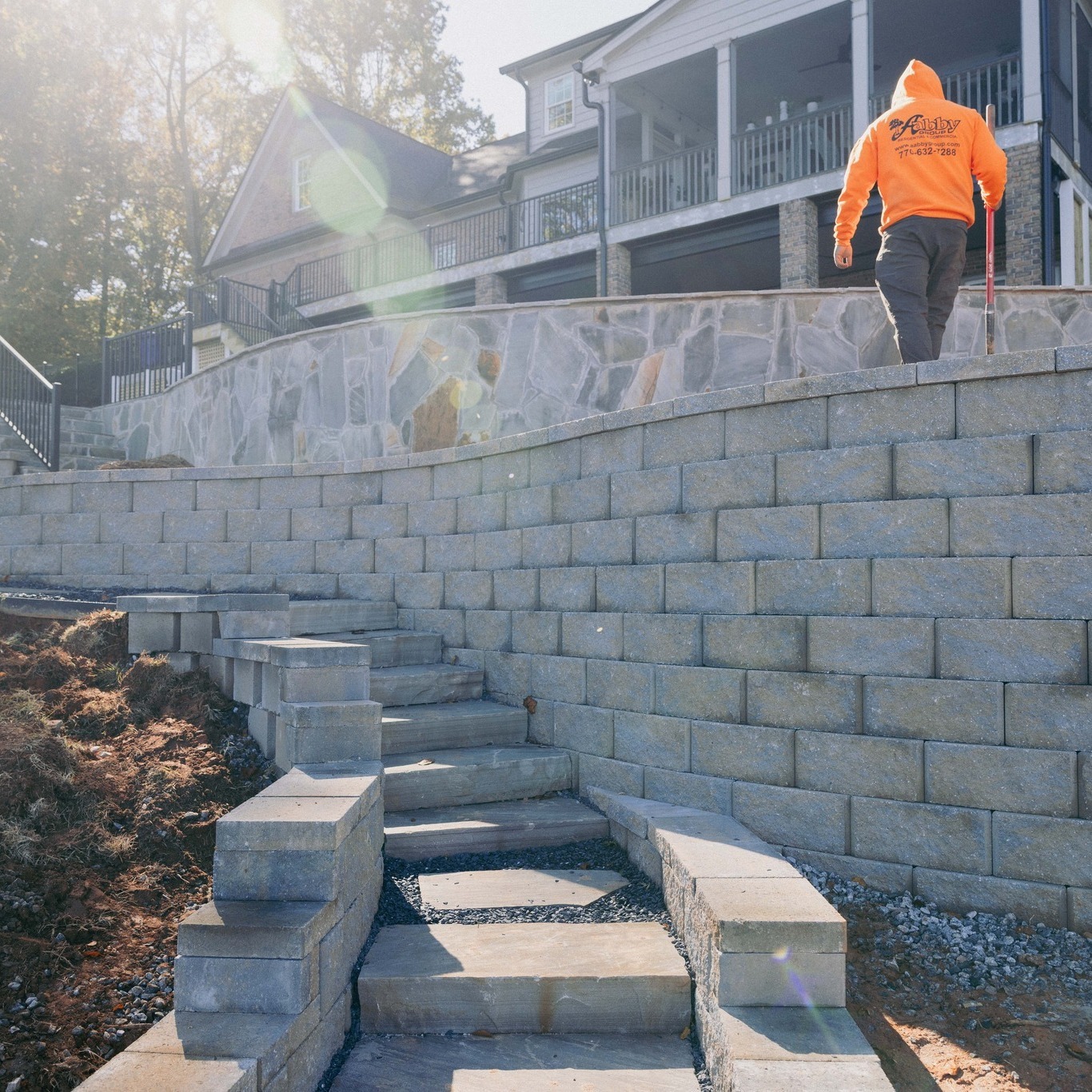
Sloped properties are common throughout parts of Georgia, particularly in areas with naturally rolling terrain. Instead of treating a slope as a problem, thoughtful landscaping can use elevation changes to create visual interest and functional outdoor areas.
Depending on the property, solutions may include retaining walls, terraced planting beds, steps, walkways, groundcovers, or strategically placed plants.
Proper grading and erosion control should always be considered when landscaping areas with significant slopes.
Add Landscape Lighting
Landscape lighting can improve the appearance and usability of your outdoor space after dark. It can also highlight some of the most attractive features of your property.
Path lighting can help illuminate walkways, while accent lighting can draw attention to trees, planting beds, architectural details, patios, or other landscape features.
For homeowners who enjoy spending time outside during the evening, well-placed lighting can help extend the use of outdoor living areas.
Plan for Privacy
If your home is close to neighboring properties, landscaping can provide a natural way to create additional privacy.
Trees, evergreen shrubs, layered planting beds, and strategically positioned landscape features can help create separation without making the property feel enclosed.
When choosing privacy plants, consider their mature height and width as well as how quickly they grow. Proper spacing can help prevent overcrowding as the plants mature.
Design Around Your Home’s Architecture
Your landscape should complement the architecture and style of your home. The shapes, materials, colors, and plants you choose can all contribute to the overall appearance of the property.
For example, a home with clean architectural lines may benefit from structured planting beds and simple hardscape designs, while a more traditional home may work well with softer planting arrangements and natural materials.
The goal is to create a landscape that feels connected to the home rather than something that was added separately.
Think About Maintenance Before You Plant
It’s easy to focus on how a landscape will look when everything is newly installed. It’s just as important to consider how much maintenance the landscape will require as it matures.
Think about mowing, pruning, watering, seasonal cleanup, fertilization, and other ongoing tasks before selecting plants and features.
If you prefer a lower-maintenance landscape, a thoughtful combination of appropriately sized plants, mulch, hardscaping, and well-planned planting beds can help reduce the amount of routine upkeep required.
Design the Entire Property as One Landscape
The most successful landscaping projects consider the entire property rather than treating each area as a separate project.
Your front yard, backyard, side yards, walkways, planting beds, drainage, lawn, and hardscaping should work together to create a cohesive outdoor environment.
For example, adding a new patio can have a much greater impact when the surrounding planting beds and walkways are incorporated into the design. Likewise, beautiful landscaping will perform better when drainage and grading are addressed at the same time.
Plan Your Landscape Around Your Lifestyle
Ultimately, the best landscaping ideas are the ones that make your property more enjoyable and functional for your household.
Before choosing plants or materials, think about what you want to accomplish. Maybe you want more space for entertaining, a more attractive front yard, better privacy, less lawn to maintain, improved drainage, or a comfortable place to spend time outdoors.
Identifying your priorities first can help you create a landscape that looks beautiful while also serving a practical purpose.
Professional Landscaping for Georgia Homes
Creating a successful landscape involves more than selecting attractive plants. Your home’s architecture, existing vegetation, soil, sunlight, drainage, grading, maintenance preferences, and lifestyle should all be considered during the planning process.
At A Abby Group, we provide residential landscaping and outdoor improvement services designed to help Georgia homeowners create beautiful and functional properties. From landscape installation and lawn maintenance to pavers, hardscapes, drainage, irrigation, lighting, and outdoor features, our team can help bring the different elements of your landscape together.
Whether you’re making a few improvements or planning a complete outdoor transformation, thoughtful landscaping can make your Georgia home more beautiful, comfortable, and enjoyable throughout the year.
Ready to improve your Georgia landscape? Contact A Abby Group to discuss your landscaping project and schedule a free estimate.