Bermuda vs. Zoysia vs. Fescue: Which Grass Is Best for Your Georgia Lawn?
Choosing the right grass for your yard can make a big difference in how your landscape looks, feels, and performs throughout the year. In Georgia, homeowners have several options, but Bermuda, Zoysia, and Fescue are some of the most common choices for lawns across Metro Atlanta.
So, which one is the best grass for Georgia homes? The answer depends on your property’s sunlight, soil, drainage, maintenance preferences, and how you want to use your lawn.
Georgia’s hot summers, mild winters, clay-heavy soil, and changing weather can create some unique lawn-care challenges. Understanding the differences between these grasses can help you choose a lawn that fits your home and your lifestyle.
Bermuda Grass: A Tough Choice for Sunny Georgia Lawns
Bermuda grass is a popular warm-season grass throughout Georgia, and for good reason. It handles heat, sunlight, foot traffic, and periods of dry weather particularly well.
For homeowners with a yard that receives plenty of direct sunlight, Bermuda can be an excellent option. It’s also commonly used for athletic fields and other high-traffic areas because of its ability to recover from wear.
Bermuda grass is a good fit if you:
- Have a lawn with plenty of full sun
- Want a durable grass that handles foot traffic
- Prefer a traditional, fine-textured Southern lawn
- Don’t mind regular mowing during the growing season
- Want a warm-season grass that performs well in Georgia’s summer heat
One thing to keep in mind is that Bermuda doesn’t perform as well in heavily shaded areas. If your yard has mature trees or other structures that block significant sunlight, another grass may be a better choice.
Zoysia Grass: A Versatile Option for Atlanta Lawns
When comparing Bermuda vs. Zoysia in Georgia, Zoysia stands out for its balance of durability, appearance, and shade tolerance.
Zoysia is a warm-season grass that creates a dense, attractive lawn. It generally has a softer feel underfoot than Bermuda and can tolerate more shade, although it still needs adequate sunlight to thrive.
Zoysia grass in Atlanta is a popular choice for homeowners who want a polished-looking lawn without choosing a grass that requires full sun throughout the entire yard.
Zoysia can be a great fit if you:
- Want a dense, attractive lawn
- Have areas of partial shade
- Want good tolerance to foot traffic
- Prefer a softer feel underfoot
- Are looking for a versatile warm-season grass
Zoysia can take a little longer to establish than some other grasses, but once established, it can provide a beautiful and durable lawn with the right care.
Fescue: A Cool-Season Alternative for Georgia
Fescue is different from Bermuda and Zoysia because it is a cool-season grass. That makes it an interesting option for Georgia homeowners who want a green lawn during the cooler months.
Tall Fescue can perform well in areas with more shade than Bermuda, making it worth considering for properties with mature trees or limited direct sunlight.
Fescue is often planted in the fall, when temperatures are cooler and conditions are more favorable for establishment. Unlike warm-season grasses, however, Fescue can struggle during Georgia’s hot summer months without proper watering and care.
Fescue may be a good choice if you:
- Have a yard with more shade
- Want a green lawn during cooler months
- Prefer a cool-season grass
- Are willing to provide additional summer care
- Have a property where warm-season grasses may not perform as well
Bermuda vs. Zoysia vs. Fescue: What’s the Difference?
There isn’t one grass that is perfect for every Georgia property. Each option has strengths and considerations that are worth weighing before you make a decision.
- Bermuda: Great for sunny yards, heat, and heavy foot traffic.
- Zoysia: A dense, attractive option with good durability and some shade tolerance.
- Fescue: A cool-season choice that can work well in shadier areas and provides green color during cooler months.
When deciding on the best grass for Atlanta lawns, it’s important to look beyond appearance. A grass that looks great in one yard may struggle in another because of differences in sunlight, soil, drainage, slope, and maintenance.
Which Grass Handles Georgia’s Climate Best?
Georgia’s climate can be tough on lawns. Summers can bring intense heat, while heavy rainfall and periods of drought can create additional stress.
Warm-season grasses like Bermuda and Zoysia are generally well suited to Georgia’s hot growing season. They actively grow during the warmer months and typically become dormant as temperatures drop.
Fescue takes a different approach. As a cool-season grass, it grows more actively during the cooler portions of the year and can struggle during the heat of summer.
That doesn’t mean one is automatically better. The best grass for Georgia depends on the specific conditions of your property.
Consider Sunlight Before Choosing Your Grass
One of the biggest factors to consider is how much sunlight your lawn receives.
Take a look at your yard throughout the day. Does it receive full sun? Are there areas shaded by trees? Does the amount of sunlight change significantly from one part of the property to another?
Generally:
- Full sun: Bermuda can be an excellent option.
- Partial shade: Zoysia may provide more flexibility.
- More significant shade: Fescue may be worth considering.
If your property has a mixture of sun and shade, a professional lawn assessment can help determine which grass will have the best chance of thriving.
Don’t Overlook Your Soil and Drainage
Georgia lawns have another important factor to contend with: soil.
Many properties throughout Metro Atlanta have heavy clay soil, which can affect water movement, root development, and overall lawn health. Poor drainage can leave grass stressed, while compacted soil can make it difficult for roots to establish properly.
Before installing new grass, it’s worth looking at the entire landscape—not just the grass itself.
Proper grading, drainage, soil preparation, and irrigation can all play a role in helping your new lawn establish successfully.
Sod Installation Can Give Your Lawn a Fresh Start
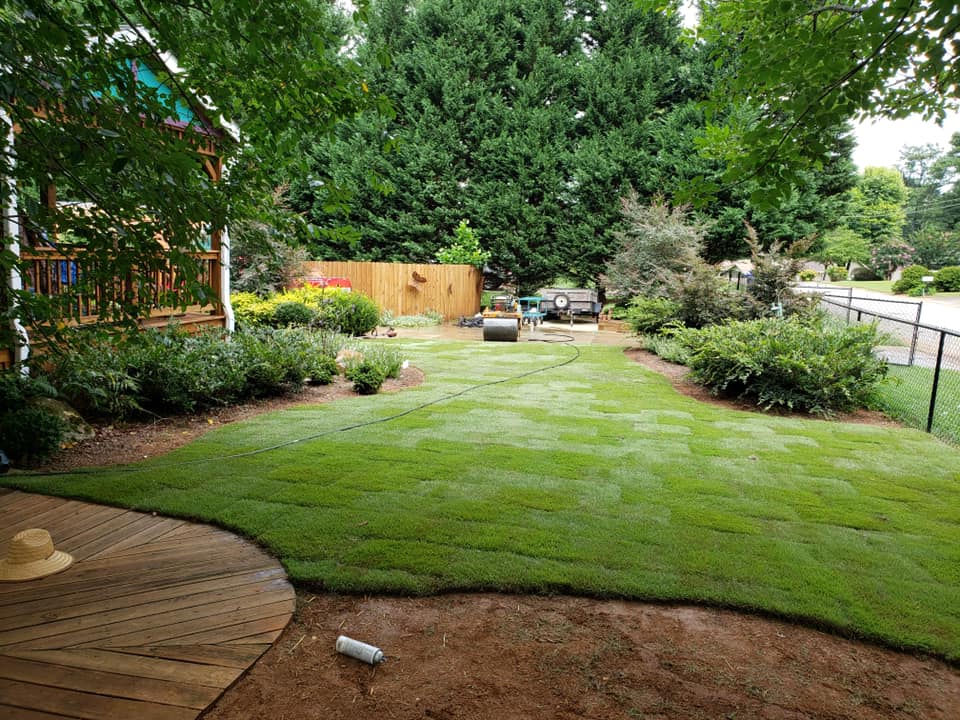
If you’re starting over with your lawn or want to make a major improvement, sod installation in Georgia can provide an immediate transformation.
Instead of waiting for seed to germinate and gradually fill in, sod provides an established layer of grass that can begin rooting into the prepared soil.
Professional sod installation typically involves:
- Preparing and grading the existing soil
- Addressing drainage or low areas when needed
- Selecting the appropriate grass for the property
- Installing sod carefully for consistent coverage
- Establishing an appropriate watering routine
- Helping the new lawn develop strong roots
Good preparation is just as important as the sod itself. Taking the time to prepare the soil and address underlying landscape issues can help your new lawn establish more successfully.
How to Choose the Best Grass for Your Georgia Lawn
Before choosing between Bermuda, Zoysia, and Fescue, consider a few important questions about your property:
- How much direct sunlight does your lawn receive?
- Does your yard have areas of significant shade?
- How much foot traffic does the lawn receive?
- Does water drain properly after heavy rain?
- What type of soil does your property have?
- How much time do you want to spend on lawn maintenance?
- Do you want your lawn greenest during summer or winter?
Answering these questions can make it much easier to narrow down your options and find a grass that fits your property instead of simply choosing the grass that looks best in a picture.
So, Which Grass Is Best for Georgia?
For many homeowners, the choice comes down to Bermuda vs. Zoysia vs. Fescue and what their individual property can support.
Bermuda is a strong choice for sunny, active lawns. Zoysia offers a dense, attractive lawn with greater flexibility in partially shaded areas. Fescue can be a good alternative for shadier properties and homeowners who want cool-season growth.
Ultimately, the best grass for Georgia is the one that matches your property’s sunlight, soil, drainage, and your expectations for maintenance and appearance.
At A Abby Group, we look at your landscape as a whole. From lawn preparation and soil conditions to drainage, irrigation, and sod installation, our goal is to create an outdoor space that looks great and works for your property.
Ready for a Better-Looking Georgia Lawn?
Choosing the right grass is only the beginning. Proper preparation, installation, irrigation, and ongoing maintenance can make all the difference in how your lawn performs.
A Abby Group provides professional landscape and lawn services throughout Metro Atlanta and surrounding Georgia communities. Whether you’re replacing an existing lawn, installing new sod, or simply looking for guidance on the best grass for your property, we’re here to help.
Contact A Abby Group today to discuss your lawn and find the right solution for your Georgia landscape.
Better grass. Better preparation. A lawn designed to thrive.