
As Georgia’s hot summer days begin to give way to cooler mornings and crisp fall evenings, your lawn needs a little extra attention. While the growing season may be slowing down, autumn is an important time to give your grass, plants, and landscaping the care they need before winter arrives.
For homeowners in Peachtree City, Tyrone, Newnan, and surrounding Metro Atlanta communities, fall lawn care in Georgia is about more than raking leaves and cutting the grass one last time. It’s an opportunity to address summer wear and tear, encourage healthy root growth, and prepare your outdoor space for the months ahead.
At A Abby Group, we understand how Georgia’s changing seasons affect local landscapes. With more than 40 years of landscaping experience, our team helps homeowners maintain attractive, healthy yards throughout the year.
Why Fall Lawn Care Matters in Georgia
Georgia’s warm climate allows homeowners to enjoy their outdoor spaces for much of the year, but the transition from summer to fall brings its own landscaping challenges.
After months of intense sunshine, high humidity, and occasional heavy rainfall, lawns may develop compacted soil, thinning grass, dry patches, or unwanted weeds. Cooler temperatures create an opportunity to address these concerns before winter dormancy.
A thoughtful fall lawn care Georgia plan can help:
- Strengthen your lawn: Support healthier root systems before winter.
- Improve soil conditions: Address compaction and encourage better water absorption.
- Reduce seasonal debris: Prevent heavy leaf buildup from smothering grass.
- Protect landscape plants: Prepare shrubs, trees, and flower beds for colder temperatures.
- Improve spring growth: Give your yard a healthier foundation for the next growing season.
The key is understanding what your particular lawn needs and when to perform each task.
1. Adjust Your Mowing Schedule as Temperatures Cool
One of the easiest ways to prepare your yard for fall is to adjust how frequently you mow.
During Georgia’s warmer months, grass can grow quickly and require regular cutting. As temperatures drop and daylight hours shorten, growth naturally begins to slow.
However, that doesn’t mean you should stop mowing altogether.
For effective fall mowing:
- Continue mowing as long as your grass is actively growing.
- Avoid cutting more than one-third of the grass blade at a time.
- Keep mower blades sharp to prevent tearing or damaging turf.
- Adjust mowing height based on your specific grass variety.
- Remove excessive clippings or debris that could block sunlight.
Many Georgia lawns contain warm-season grasses such as Bermuda, Zoysia, or Centipede, which gradually enter dormancy as temperatures cool. These grasses have different maintenance requirements than cool-season varieties like tall fescue.
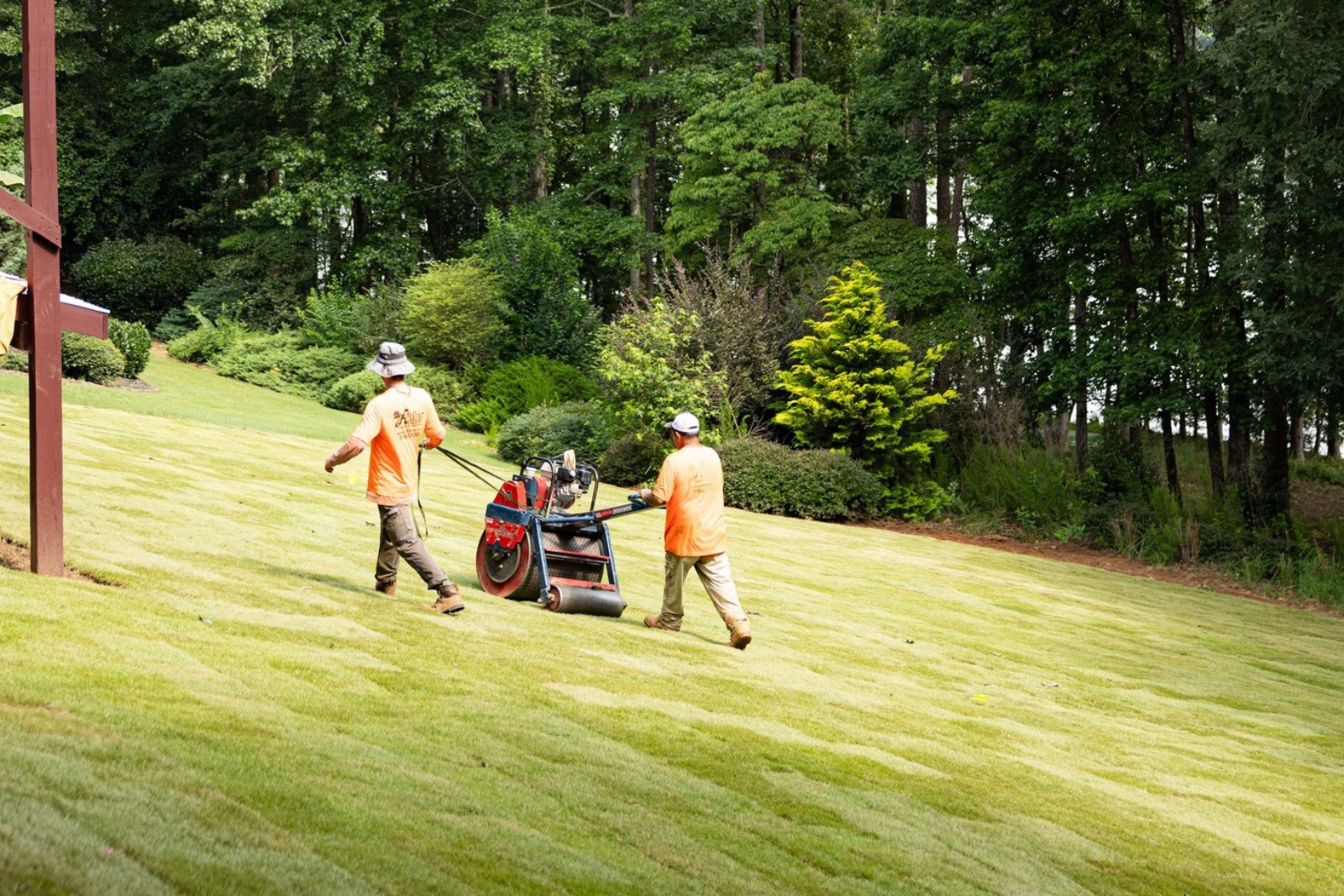
If you’re looking for professional lawn maintenance in Peachtree City, A Abby Group can help you develop a mowing and maintenance schedule that fits your property’s needs.
2. Aerate Compacted Soil When the Timing Is Right
Georgia’s clay-heavy soil can become compacted over time, especially in yards with frequent foot traffic, pets, or heavy equipment use.
Compacted soil makes it difficult for water, oxygen, and nutrients to reach grass roots. This can contribute to thinning turf, poor drainage, and uneven lawn growth.
Core aeration helps relieve compaction by removing small plugs of soil, allowing air and moisture to move more freely through the ground.
However, the best time to aerate depends on your grass type.
- Tall fescue: Fall is generally an excellent time to aerate and overseed.
- Bermuda and Zoysia: Aeration is usually best during active growth in late spring or summer.
- Centipede: Aeration should typically be performed during its warm-season growing period.
For homeowners throughout Tyrone and Peachtree City, identifying the right grass variety before scheduling aeration can help prevent unnecessary stress on the lawn.
A Abby Group can evaluate your turf and recommend the appropriate seasonal maintenance approach.
3. Remove Fallen Leaves Before They Build Up
Fall foliage can make Georgia neighborhoods look beautiful, but thick layers of leaves can quickly become a problem for your lawn.
When leaves accumulate, they can block sunlight, trap moisture, and reduce airflow around the grass. Over time, this may contribute to unhealthy turf or bare patches.
Regular leaf management is an important part of fall landscaping in Tyrone, GA, particularly for properties surrounded by mature trees.
Consider these practical tips:
- Clear heavy leaf coverage: Don’t allow thick, wet layers to sit on your lawn for extended periods.
- Mulch light leaf coverage: Use a mulching mower to break leaves into small pieces that can decompose naturally.
- Clean landscape beds: Remove excessive debris from around shrubs and ornamental plants.
- Check drainage areas: Keep leaves away from catch basins, drainage channels, and other water outlets.
Keeping your property clear of seasonal debris helps maintain a neat appearance while protecting your grass and landscaping.
4. Fertilize Based on Your Grass Type
Fertilization can play an important role in lawn health, but applying the wrong product at the wrong time may do more harm than good.
For many Georgia homeowners, fall fertilizer recommendations depend heavily on whether the lawn contains warm-season or cool-season grass.
Warm-season lawns: Bermuda, Zoysia, and Centipede generally begin slowing their growth in fall. Heavy nitrogen applications late in the season may encourage tender growth that is vulnerable to cold damage.
Cool-season lawns: Tall fescue actively grows during cooler weather and often benefits from a properly timed fall fertilization program.
Before applying fertilizer, consider having your soil tested to identify nutrient deficiencies and determine whether amendments are needed.
A soil-based approach helps avoid unnecessary applications and supports healthier turf over time.
For homeowners seeking dependable lawn care in Newnan, GA, professional turf management can take the guesswork out of seasonal fertilization and help ensure treatments are appropriate for local conditions.
5. Keep Watering, but Pay Attention to the Weather
One common mistake homeowners make is assuming their lawn no longer needs water once summer ends.
Although cooler temperatures reduce evaporation, Georgia can still experience extended dry periods during the fall.
Your lawn, trees, and landscape plants may continue needing moisture, especially during weeks with limited rainfall.
To manage watering effectively:
- Monitor rainfall before running your irrigation system.
- Water deeply when needed rather than using frequent, shallow watering cycles.
- Avoid watering late in the evening when moisture may remain on grass overnight.
- Check sprinkler heads for leaks, clogs, or uneven coverage.
- Reduce irrigation frequency as grass growth slows and water demand decreases.
Fall is also a good time to inspect your irrigation system. Making adjustments now can prevent unnecessary water usage and help protect equipment as colder weather approaches.
6. Refresh Mulch and Prepare Landscape Beds
Your lawn isn’t the only part of your property that needs seasonal attention.
Trees, shrubs, flower beds, and ornamental plantings can benefit from a little preparation before temperatures drop.
Adding or refreshing mulch helps regulate soil temperatures, retain moisture, and improve the appearance of landscape beds.
A layer of approximately two to three inches of organic mulch is often appropriate, depending on the existing material and plants. Keep mulch away from tree trunks and shrub stems to avoid trapping excessive moisture against them.
Fall is also an opportunity to:
- Remove weeds and unwanted vegetation from planting beds.
- Trim dead or damaged branches where appropriate.
- Replace struggling seasonal plants with suitable cool-weather varieties.
- Inspect shrubs and ornamental trees for signs of stress.
- Clean up bed edges for a polished appearance.
For homeowners considering fall landscaping in Tyrone, GA, these smaller improvements can make a noticeable difference in curb appeal while helping protect landscape investments.
7. Address Bare Spots and Plan for Spring
After a long Georgia summer, it’s not unusual to notice thin or bare patches throughout your yard.
These areas may develop because of shade, foot traffic, compacted soil, drought stress, or other underlying issues.
Before adding seed or installing new sod, it’s important to determine why the grass struggled in the first place.
Fall is an ideal season to establish or overseed tall fescue lawns, while Bermuda, Zoysia, and other warm-season grasses are generally better established during warmer growing conditions.
Rather than rushing into repairs, consider using fall to evaluate your property’s overall condition.
Are certain areas receiving too much shade? Does water collect in low spots? Has the lawn become uneven or difficult to maintain?
Identifying these concerns now gives you time to plan improvements that can be completed during the appropriate growing season.
8. Don’t Forget About Trees, Shrubs, and Outdoor Features
A complete fall lawn care plan should include the surrounding landscape, not just the grass.
Georgia’s cooler fall temperatures can provide favorable conditions for planting many trees and shrubs, giving roots time to establish before summer heat returns.
It’s also a good time to inspect existing landscape features and identify maintenance needs.
Take a walk around your property and look for:
- Overgrown shrubs blocking walkways or windows.
- Broken or damaged tree branches.
- Weeds spreading into landscape beds.
- Uneven edging along patios and sidewalks.
- Debris collecting around drainage outlets.
- Irrigation leaks or areas receiving too much water.
For homeowners throughout Newnan, Tyrone, and Peachtree City, addressing these details can help keep outdoor spaces attractive, functional, and easier to maintain.
When Should You Start Fall Lawn Care in Georgia?
In the Metro Atlanta area, fall lawn preparation often begins in September and continues through November, depending on weather conditions and grass type.
Here’s a general seasonal timeline:
September: Evaluate and Prepare
- Inspect your lawn for summer damage.
- Identify grass types and maintenance needs.
- Plan fall seeding for cool-season lawns.
- Evaluate soil conditions and irrigation performance.
October: Maintain and Improve
- Continue mowing as needed.
- Manage falling leaves and landscape debris.
- Refresh mulch and seasonal planting beds.
- Monitor watering and fertilization needs.
November: Prepare for Winter
- Complete remaining leaf cleanup.
- Reduce mowing as warm-season turf becomes dormant.
- Check irrigation equipment before freezing temperatures.
- Inspect trees, shrubs, and outdoor features for potential winter concerns.
Keep in mind that Georgia weather can vary significantly from year to year. Rather than following a rigid calendar, adjust your maintenance activities to current conditions and your lawn’s specific requirements.
Professional Fall Lawn Care Makes Seasonal Maintenance Easier
Keeping up with seasonal landscaping can feel like a lot, especially when you’re balancing work, family, and everything else on your schedule.
From mowing and leaf cleanup to irrigation adjustments and turf management, maintaining a healthy lawn requires attention to several moving parts.
Professional lawn maintenance in Peachtree City, lawn care in Newnan, GA, and fall landscaping in Tyrone, GA can help homeowners stay ahead of seasonal changes without spending every weekend working in the yard.
At A Abby Group, we take a practical, personalized approach to landscape maintenance. Our team understands Georgia’s soil conditions, grass varieties, and seasonal weather patterns, allowing us to recommend solutions that make sense for your property.
Whether your lawn needs routine attention, seasonal cleanup, or a more comprehensive landscape improvement plan, we’re here to help.
Get Your Georgia Lawn Ready for Fall With A Abby Group
A beautiful spring lawn starts with thoughtful care during the fall. Taking time to manage leaves, evaluate soil conditions, adjust irrigation, and prepare your landscaping can make a meaningful difference in how your yard looks and performs throughout the year.
At A Abby Group, we help homeowners throughout Peachtree City, Tyrone, Newnan, and surrounding Metro Atlanta communities maintain outdoor spaces they can enjoy in every season.
With more than 40 years of landscaping experience, our team provides dependable lawn care, landscape maintenance, and seasonal services tailored to your property’s needs.
Ready to Give Your Lawn a Head Start Before Winter?
Let A Abby Group handle the seasonal upkeep so you can spend more time enjoying your outdoor space.
Contact A Abby Group today to schedule your free estimate!
Call 770-632-7288 or visit our Contact Us page to get started.