If you live in Georgia, you know how quickly a heavy rain can change the look and feel of your yard. One day everything looks great, and the next you’re dealing with puddles, muddy grass, washed-out mulch, or water collecting where it shouldn’t.
Drainage problems are common in Metro Atlanta, especially with our heavy rainfall, clay-heavy soil, sloped properties, and sudden downpours. The good news is that the right drainage plan can help protect your lawn, landscaping, and home while making your outdoor space easier to enjoy.
In this guide, we’ll look at some of the most common drainage problems Georgia homeowners face and explore practical yard drainage solutions in Atlanta for standing water, erosion, and poor water flow.
Why Drainage Problems Are Common in Georgia
Every property handles rain differently. The slope of your yard, soil conditions, landscaping, hardscapes, gutters, and downspouts can all affect where water goes during and after a storm.
Georgia’s clay-heavy soil can make drainage especially challenging because it tends to hold moisture rather than allowing water to move quickly through the ground. When heavy rain meets compacted soil or poor grading, water may have nowhere to go.
Common signs of poor landscape drainage include:
- Standing water that remains in your yard after rainfall
- Soggy or muddy areas that never seem to dry
- Grass that becomes thin, damaged, or difficult to maintain
- Mulch or soil washing away after heavy storms
- Erosion along slopes and hillsides
- Water collecting near patios, walkways, or driveways
- Runoff flowing toward your home or foundation
If you’re seeing these issues regularly, it may be more than a temporary puddle. Your property may need a more intentional drainage solution.
How to Fix Standing Water in Your Yard
A little water after a major storm is normal. However, if you have a standing water in your yard problem that lasts for days or keeps returning in the same location, there may be an underlying drainage issue.
Standing water can be caused by low areas in the landscape, compacted soil, improper grading, excessive runoff, or water being directed into an area that cannot absorb it properly.
The first step is identifying where the water is coming from and where it needs to go. Depending on your property, solutions may include:
- Correcting low areas through grading
- Improving the slope of the landscape
- Installing a French drain
- Adding catch basins to collect runoff
- Redirecting downspouts away from the home
- Installing a dry well where appropriate
- Using drainage-friendly landscape or hardscape features
The goal isn’t simply to move water from one part of the yard to another. A properly planned drainage system should give excess water a controlled path away from areas where it can cause problems.
French Drains: A Popular Solution for Atlanta Homes
A French drain in Atlanta can be an effective way to manage both surface water and groundwater around your property. These underground drainage systems use a perforated pipe surrounded by drainage material to collect and redirect water away from problem areas.
French drains can be particularly helpful when water consistently collects in a low area or when runoff needs to be redirected away from a home’s foundation, landscaped areas, or other important parts of the property.
Depending on the layout of your yard, a French drain may help with:
- Water collecting in low-lying areas
- Excess moisture near foundations
- Runoff moving toward landscaped areas
- Soggy sections of lawn
- Groundwater and surface water concerns
- Drainage issues around outdoor living spaces
Not every property needs a French drain, though. The right drainage solution depends on how water moves across your specific property. A professional assessment can help determine whether a French drain, catch basin, grading adjustment, or another approach makes the most sense.
Yard Erosion Solutions for Sloped Properties
Water doesn’t just create puddles. When runoff moves too quickly across a sloped yard, it can carry soil, mulch, and landscape materials with it. Over time, this can leave exposed roots, washed-out areas, channels in the lawn, and unstable slopes.
Finding effective yard erosion solutions starts with understanding why the water is moving so aggressively in the first place.
Depending on the severity and location of the erosion, solutions may include:
- Regrading to improve the direction of water flow
- French drains to collect and redirect water
- Catch basins to capture concentrated runoff
- Retaining walls to help stabilize certain slopes
- Strategic plantings to help hold soil in place
- Drainage-friendly hardscaping
- Mulch and landscape improvements designed to reduce soil loss
Addressing erosion early can help prevent a small drainage concern from turning into a much larger landscape problem.
Improve Grading to Control Water Flow
Sometimes the most effective drainage solution is also one of the simplest: changing the way the ground slopes.
Proper grading helps direct water away from your home and toward an appropriate drainage area. When a yard is too flat, slopes in the wrong direction, or contains low spots, rainwater can collect instead of flowing naturally away.
Professional grading takes the entire property into consideration. The goal is to create a practical flow of water while maintaining a landscape that looks natural and works with your existing lawn, plantings, patios, walkways, and other outdoor features.
This is an important part of landscape drainage in Georgia because every property has its own combination of soil, slope, structures, and water-flow patterns.
Don’t Forget Your Gutters and Downspouts
Your landscape drainage system doesn’t start at the edge of your lawn. Your home’s gutters and downspouts play an important role in managing rainwater, too.
If a downspout releases a large amount of water directly next to your home or into an already saturated area, it can contribute to pooling, erosion, and foundation concerns.
As part of a drainage assessment, it can be helpful to look at:
- Where each downspout releases water
- Whether water is flowing toward or away from the home
- Areas where concentrated runoff is causing erosion
- Whether drainage systems are connected properly
- Where excess water can be safely redirected
Managing runoff at the source can make a significant difference in how your yard handles heavy Georgia rainfall.
Other Yard Drainage Solutions to Consider
French drains and grading are not the only options available. Depending on your property’s needs, a combination of drainage solutions may provide the best long-term results.
Some additional options include:
- Catch Basins: Collect surface runoff in low areas and redirect it through underground drainage piping.
- Dry Wells: Help manage excess water underground by allowing it to disperse into surrounding soil where appropriate.
- Channel Drains: Collect surface water along driveways, patios, walkways, and other hardscape areas.
- Permeable Pavers: Allow water to pass through the surface, helping reduce runoff and water accumulation.
- Drainage-Friendly Landscaping: Strategic grading, plantings, and landscape design can help your yard work with the natural movement of water.
The best approach is often a combination of solutions designed around the property’s specific drainage challenges.
When Should You Call a Professional?
If you’re constantly fighting the same puddles, muddy areas, or erosion after every major storm, it may be time to look beyond temporary fixes.
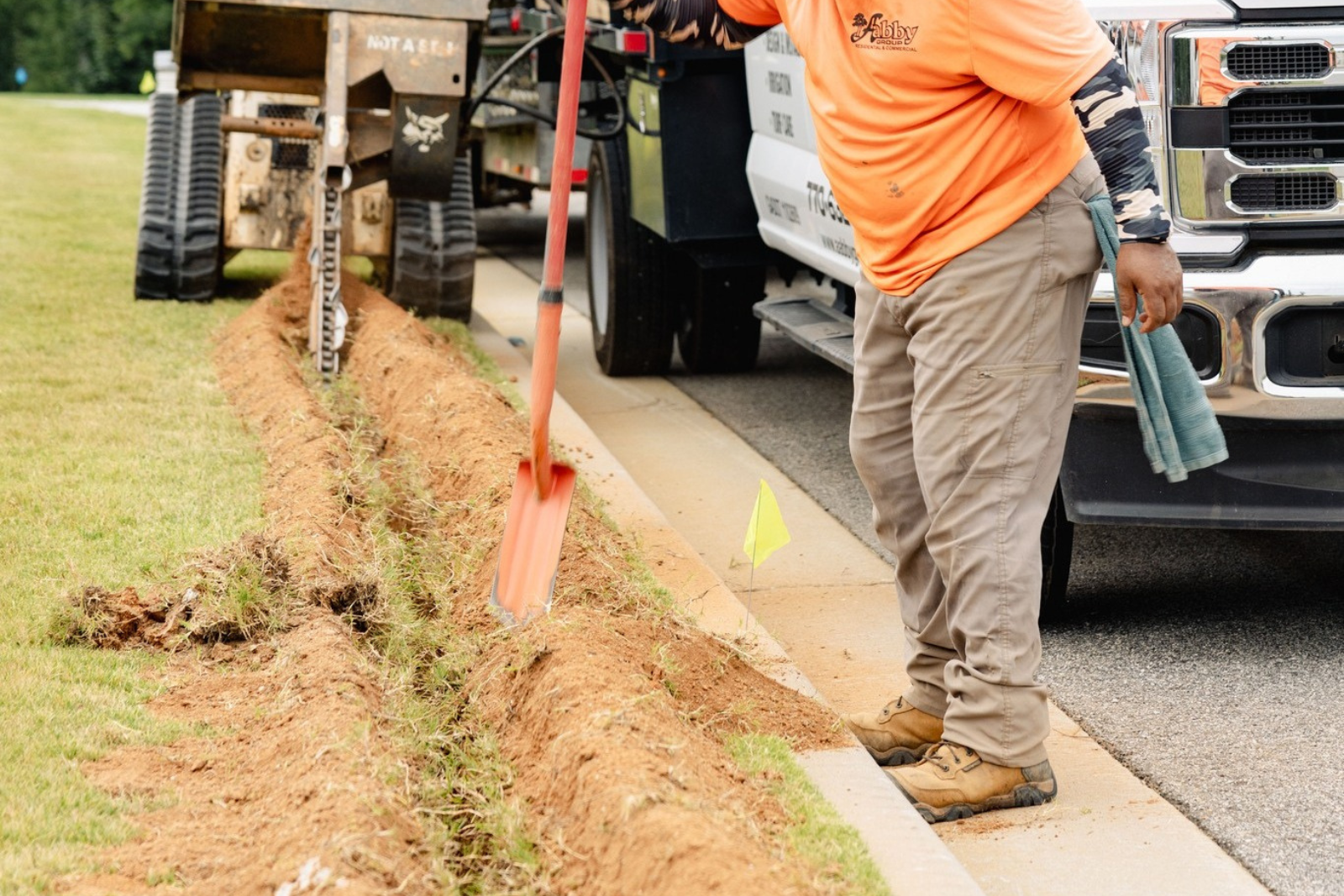
A professional drainage assessment can help identify the source of the problem and determine what needs to change. Instead of simply covering up a wet spot or adding more soil, a thoughtful drainage plan addresses why the water is collecting in the first place.
This can be especially important when water is collecting near your home’s foundation, damaging established landscaping, washing away soil, or creating areas that remain saturated for extended periods.
Creating a Healthier, More Functional Yard
Good drainage is about more than keeping your lawn dry. It plays an important role in protecting your landscape, improving the usability of your outdoor space, and helping your property handle Georgia’s unpredictable rainfall.
Whether you need a French drain in Atlanta, grading improvements, erosion control, catch basins, downspout management, or a combination of drainage solutions, the right plan should be built around your property.
At A Abby Group, we take a practical, property-focused approach to drainage. Our team evaluates grading, soil conditions, water flow, low areas, downspouts, landscaping, and hardscape features to develop solutions designed to improve how water moves through your yard.
Ready to Solve Your Yard Drainage Problems?
Don’t let standing water, erosion, or poor drainage take away from your outdoor space. A Abby Group provides custom drainage solutions for homeowners throughout Metro Atlanta and the surrounding areas.
From French drains and catch basins to grading, downspout management, and drainage-friendly landscape solutions, we can help you find a better way to manage water on your property.
Contact A Abby Group today to schedule a drainage assessment and take the first step toward a healthier, better-functioning yard.
Better water flow. Healthier landscapes. Solutions built around your property.
Call 770-632-7288 or request a quote to get started.